From the Blog · College Grove, TN
Slow Drain Causes: What Is Really Going On
Slow drains have five usual causes, and each wants a different fix. Hair and soap in bathroom traps, grease coating kitchen lines, scale narrowing older metal pipes, a venting problem making drains gurgle and hesitate, and a main line beginning to obstruct. Location is the diagnostic key: one fixture means a local cause; several fixtures mean the shared line.
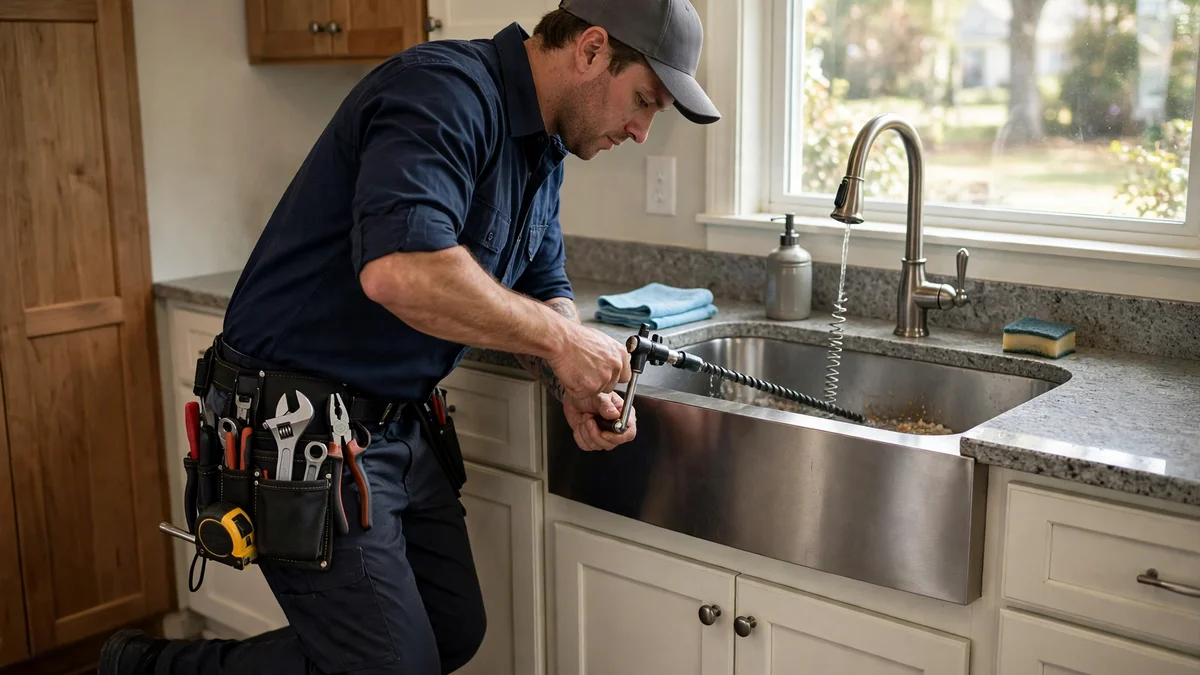
Read the pattern before reaching for tools
Map which fixtures are slow. A single bathroom sink is almost always its trap and tailpiece: hair, toothpaste and soap scum in a removable assembly. A kitchen sink slowing over months is grease building on the line walls. Several fixtures together move suspicion to the branch or the main, and gurgling adds venting to the list.
Chemical cleaners treat none of these causes well and complicate the ones that need a cable or a camera. The pattern costs nothing to observe and decides the right service, whether that is drain cleaning or a clog repair.
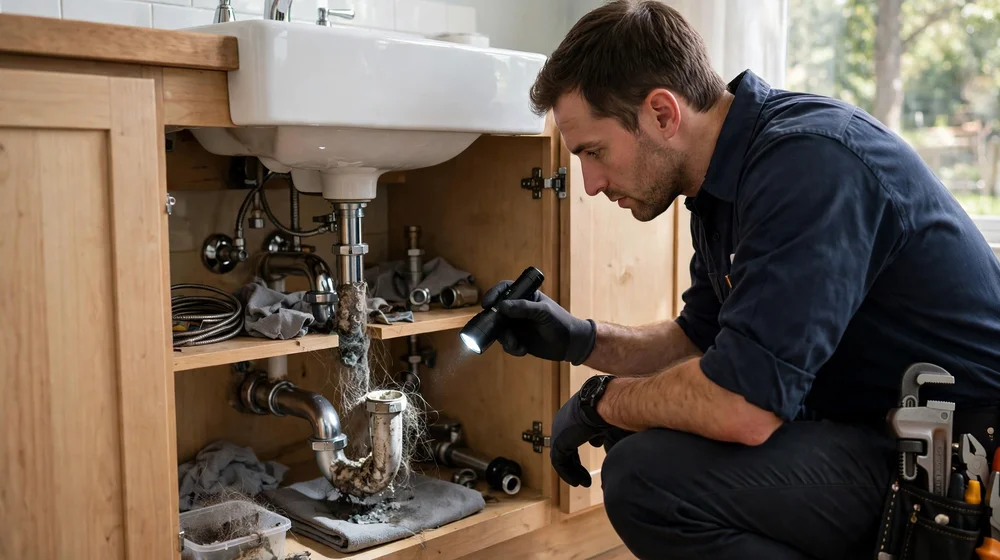
The causes nobody sees: scale and venting
Older galvanized and cast iron drains narrow from inside as scale grows, until a drain that was fine for decades slows in a single season. No cleaning restores the original bore fully, though hydro jetting recovers much of it and a camera shows how much pipe is left.
Venting faults are the impostors: a drain can be perfectly clear and still drain slowly, gulping air through its own trap because the vent path is blocked. The gurgle is the giveaway, and the fix is at the vent, not in the drain at all.
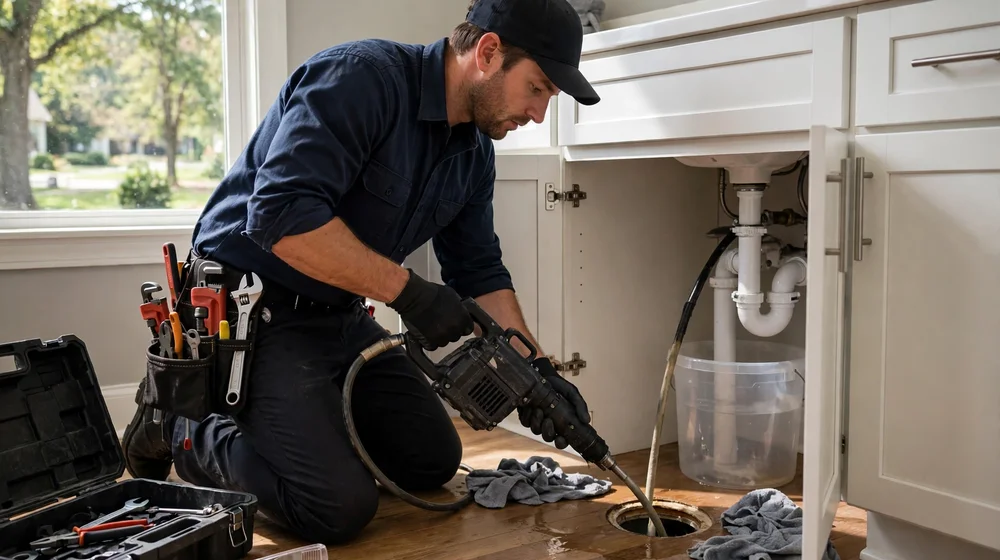
When slow means call soon
Slow plus odor, slow plus gurgling toilets, or slow in the lowest fixtures of the house all suggest the main line, where delay turns a cleaning into a backup. Those patterns skip the DIY stage and go straight to a diagnosis, because the downside of waiting is sewage in a tub.