From the Blog · College Grove, TN
Slab Leak Signs: How to Spot One Early
The early signs of a slab leak are a water meter that moves with every fixture off, a water bill rising without explanation, a warm or damp patch on the floor, the sound of water running underfoot, and hot water that empties faster than it should. Caught early, the repair is a located spot fix or a planned reroute; caught late, it adds flooring and moisture damage to the bill.
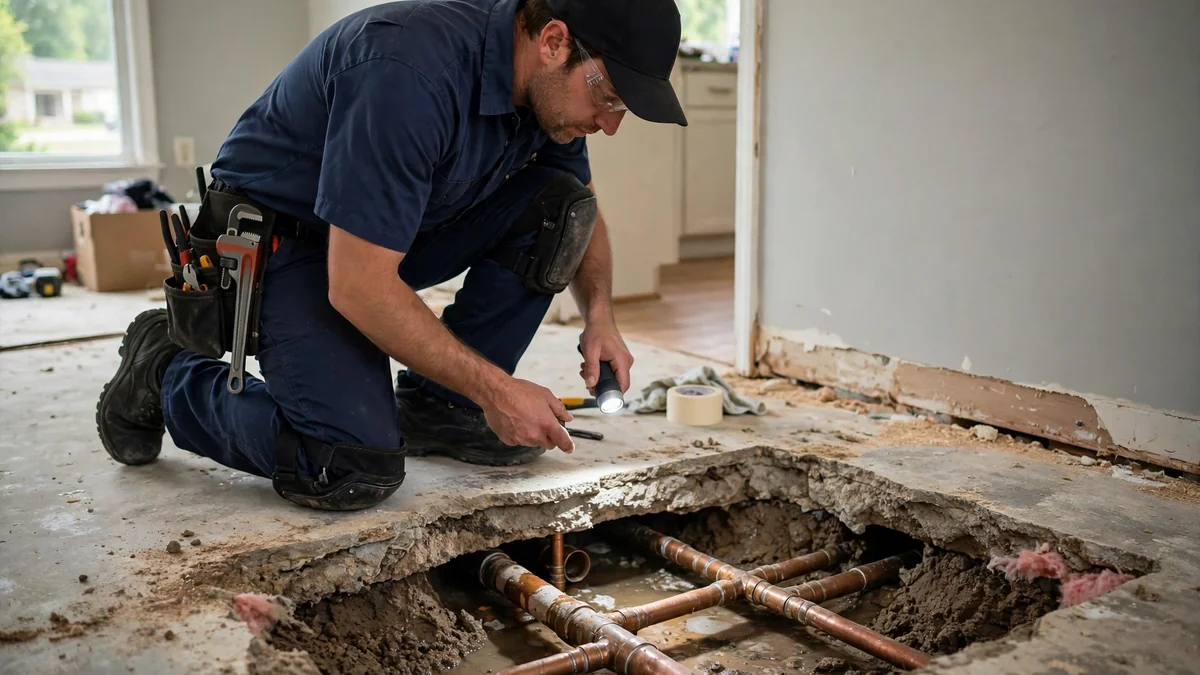
The meter test comes first
Before any equipment, confirm the suspicion. Note the meter, use no water for a couple of hours, and check again. Movement with the house idle means water is leaving somewhere, and if indoor checks (toilets, faucets, the water heater) come up clean, an underground or under-slab leak moves to the top of the list.
Warmth is the second witness: a hot-water slab leak warms the concrete and flooring above it, sometimes enough to feel barefoot. Cold-line leaks show as dampness, lifting flooring or a musty corner instead. Either pattern deserves our leak detection testing rather than guesswork.
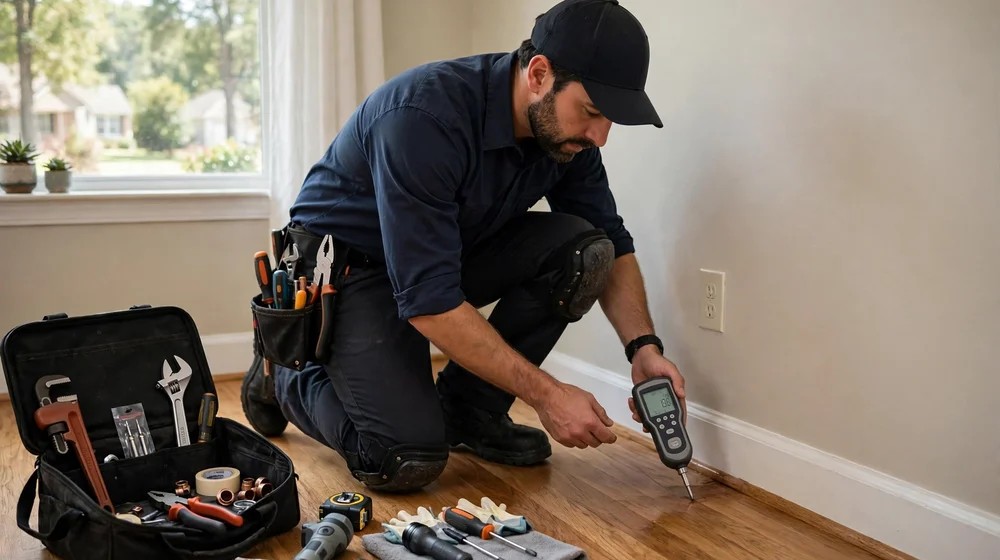
Why early matters so much
A slab leak soaks the soil under the home and feeds moisture into flooring and walls for as long as it runs. The plumbing repair itself is measured in hours; the flooring, baseboard and mold consequences of a month-long leak are measured in weeks. Time is the cost driver, which is why a suspicious meter earns a call even before any floor feels wet.
Once located precisely, the choice is between a spot repair through a small slab opening and rerouting the line overhead, detailed on our slab leak repair page. Leak history decides: a first leak in sound pipe is a spot fix; repeat leaks argue for the reroute.
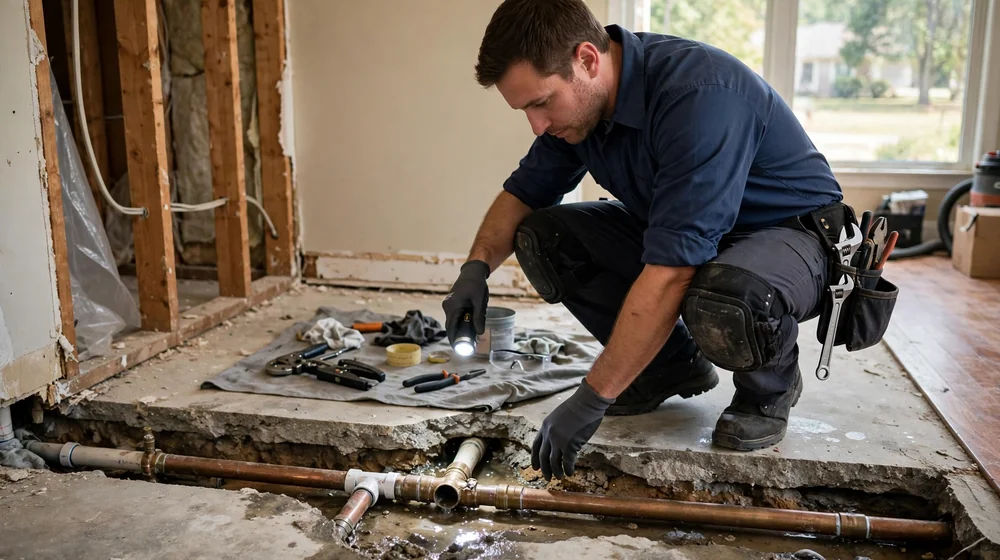
What not to do
Do not ignore a rising bill hoping it is a misread, and do not let anyone begin jackhammering on suspicion. Location testing exists precisely so the only hole in your slab is the one the repair needs.