From the Blog · College Grove, TN
Hard Water in Williamson County: What It Does to Your Home
Williamson County water is mineral-heavy, and its effects are mechanical, not cosmetic: scale insulates water heater elements and tank floors, chokes tankless exchangers into shutdown codes, crusts faucet cartridges and showerheads, and shortens appliance life across the house. Testing your hardness number is the first step; softening, descaling and flushing schedules are the practical answers.
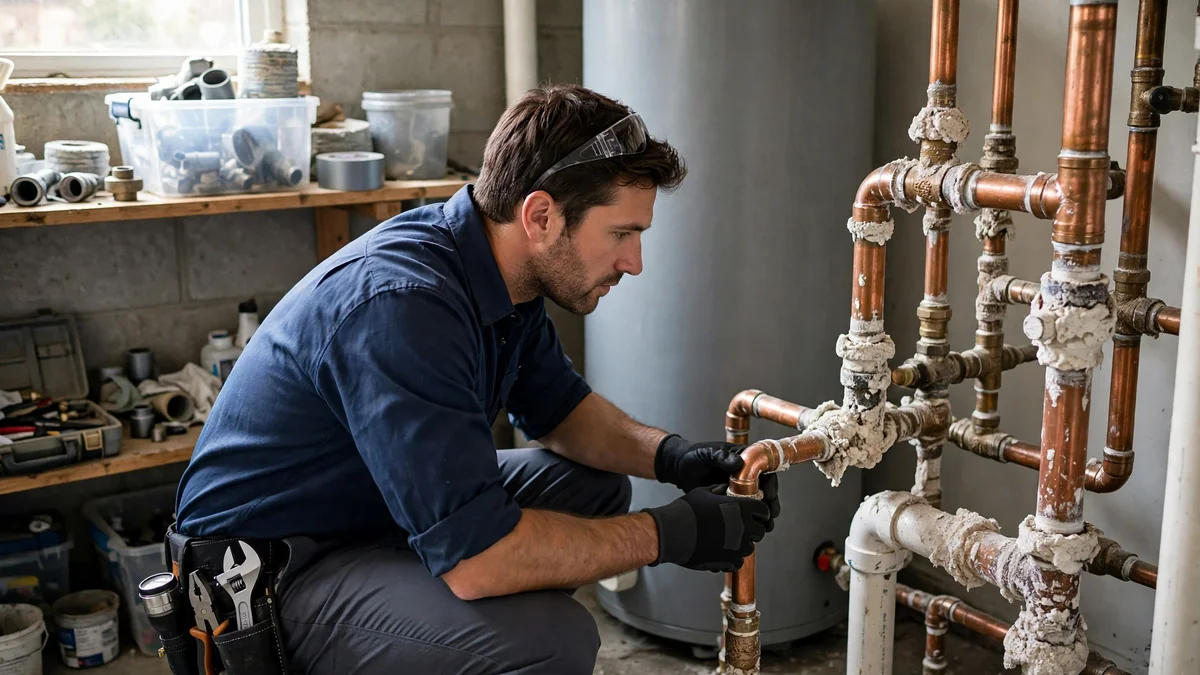
Follow the scale through the house
Start at the water heater, where minerals settle as sediment that rumbles, wastes energy and cooks tank steel. Move to the tankless exchanger, where a millimeter of scale on hot surfaces is enough to trigger overheating faults. Then the fixtures: cartridges stiffen, aerators clog, showerheads spray sideways.
None of this is a mystery once you see the pattern, and none of it is fixed by wiping surfaces. The water itself is the variable, which is why our water softener and filtration work starts with a hardness test at your tap.
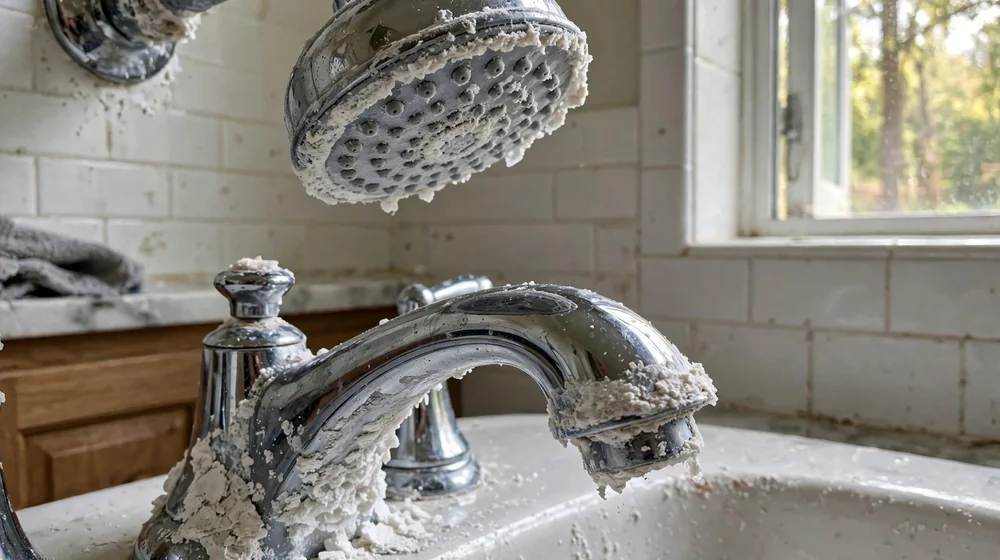
What helps, in order of leverage
First, protect the expensive heat exchangers: annual tankless descaling and annual tank flushing move the most value. Second, consider softening if your tested hardness and repair history justify it; softened water slows every scale process in the house at once.
Third, accept the small rituals: vinegar-soaking a showerhead, wiping fixture crust before it hardens. They are cosmetics, but cheap ones. What does not help is ignoring the pattern while paying for its repairs one fixture at a time.
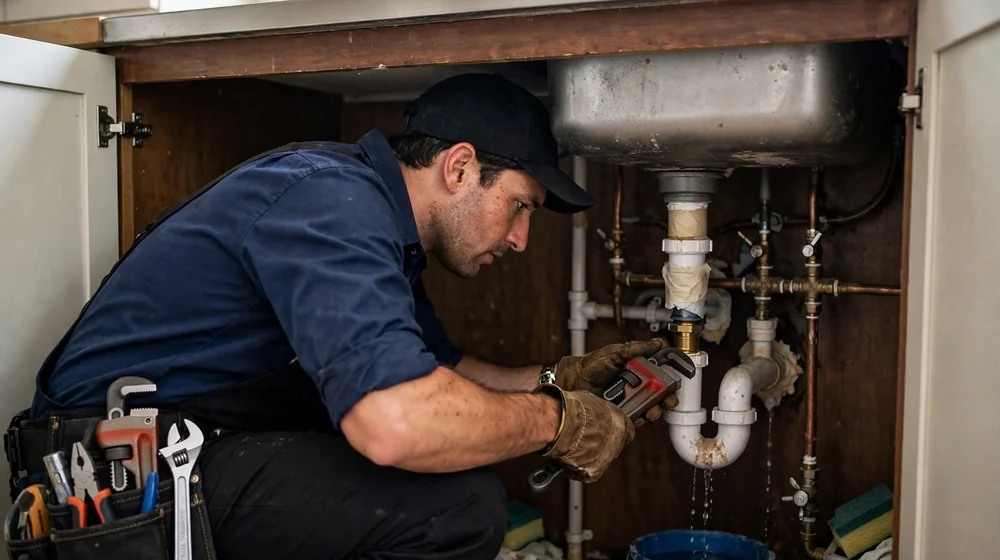
Wells are their own chapter
Well properties around College Grove add iron, sediment and sometimes sulfur to the hardness story. Those need testing beyond hardness and treatment matched to results, because a softener alone does not remove iron staining or rotten-egg odor.